
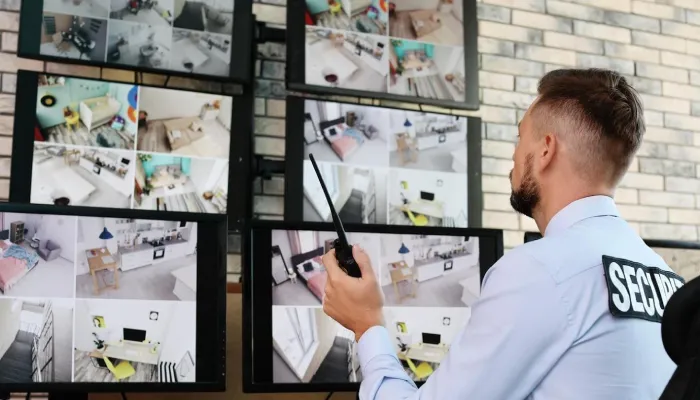
The Legal Framework Governing CCTV Use in UK Retail
Before a single camera is installed or a single minute of footage is reviewed, retail security professionals must understand the legal framework that governs every aspect of CCTV operation in the United Kingdom. Using CCTV legally to track shoplifting suspects means operating within a structured set of laws and regulatory guidelines that exist to protect both the public and the organisations deploying surveillance technology.
| Legislation / Regulation | Relevance to Retail CCTV |
|---|---|
| UK GDPR (2021) | Defines the legal basis for capturing and retaining CCTV footage |
| Data Protection Act 2018 | Governs subject access requests, data retention, and security obligations |
| Human Rights Act 1998 | Limits surveillance to proportionate, necessary, and justified purposes |
| ICO CCTV Code of Practice | Practical compliance framework for all CCTV system operators |
| Protection of Freedoms Act 2012 | Establishes the Surveillance Camera Code of Practice |
⚖️
Legal Basis Under UK GDPR
To lawfully process personal data, which includes CCTV footage, a retail business must establish a valid legal basis under UK GDPR Article 6. For the purpose of crime prevention and shoplifting detection, the most commonly relied upon bases are Legitimate Interests (Article 6(1)(f)) and Legal Obligation (Article 6(1)(c)). A Legitimate Interests Assessment (LIA) should be completed and documented before deploying any CCTV system.
ICO Guidelines: What Retail CCTV Operators Must Do
The Information Commissioner’s Office (ICO) is the UK’s independent data protection regulator. Its CCTV Code of Practice provides the definitive operational guidance for anyone using CCTV in a retail environment. Compliance with ICO guidelines is not optional, it is a legal requirement under the Data Protection Act 2018 and UK GDPR.
Core ICO Obligations for Retail CCTV Systems
- Register with the ICO as a data controller if your organisation processes personal data, including CCTV footage, this is mandatory for virtually all retail businesses
- Display clear, prominent, and legible CCTV warning signs at all entry points to monitored areas before individuals enter the surveillance zone
- Conduct and document a Data Protection Impact Assessment (DPIA) before installing any new CCTV system or significantly changing an existing one
- Ensure CCTV cameras are positioned only to capture areas that are genuinely necessary for the stated purpose, do not film areas where there is a heightened expectation of privacy, such as changing rooms or staff rest areas
- Limit access to live and recorded CCTV footage to authorised personnel only, implement access controls, audit logs, and password protection
- Establish and adhere to a clear data retention policy, footage should not be kept longer than necessary for its stated purpose
- Respond promptly and correctly to Subject Access Requests (SARs) from individuals who request to view footage in which they appear
- Maintain a written record of your CCTV system, its purpose, the data it captures, how long it is retained, and who has access to it
⚠️
Common Compliance Failure
One of the most frequently cited ICO enforcement failures in retail CCTV is the absence of adequate signage. Signs must be clearly visible before a person enters a surveilled area, not just at tills or inside the store. They must identify the data controller and provide contact details or a reference to a privacy notice.
How to Use CCTV Legally When Monitoring Shoplifting Suspects
Understanding the general legal framework is essential, but the real challenge for retail security professionals is applying those principles in real-time operational scenarios. Using CCTV legally to track shoplifting suspects requires discipline, proportionality, and clear operational protocols that every CCTV operator must follow consistently.
The Proportionality Principle
Under UK GDPR and the Human Rights Act 1998, any surveillance activity must be proportionate to the legitimate aim being pursued. In a retail context, this means that the level of monitoring applied to a suspect must be proportionate to the evidence available and the seriousness of the suspected activity. Targeting individuals based solely on protected characteristics, such as race, religion, or disability, is unlawful discrimination under the Equality Act 2010 and represents a serious abuse of CCTV systems.
✅ Lawful CCTV Practice
- Monitor individuals who display specific behavioural indicators of shoplifting activity
- Record and preserve footage that constitutes evidence of a criminal act
- Share footage with police when requested or in connection with a specific crime report
- Use CCTV to identify suspects after an incident has occurred
- Operate cameras covering public-facing areas of the retail floor and stock rooms accessible to customers
- Retain relevant footage in a secure, access-controlled format pending investigation
❌ Unlawful CCTV Practice
- Target individuals based on race, ethnicity, religion, age, disability, or other protected characteristics
- Film areas with a reasonable expectation of privacy, changing rooms, toilets, prayer rooms
- Share footage on social media, messaging apps, or with unauthorised third parties
- Retain footage indefinitely without a documented legal justification for extended retention
- Operate hidden cameras in retail environments without adequate public-facing signage
- Allow uncontrolled access to live or recorded footage by staff without proper authorisation
Data Retention: How Long Can You Keep Shoplifting Footage?
Data retention is one of the most misunderstood aspects of using CCTV legally to track shoplifting suspects. The UK GDPR storage limitation principle requires that personal data, including video footage, must not be kept longer than is necessary for the purpose for which it was collected.
For routine retail CCTV, the ICO recommends a standard retention period of 31 days, after which footage should be automatically overwritten or deleted. However, where footage captures an incident that may result in a criminal investigation, civil claim, or insurance matter, retention for a longer period is justifiable, provided it is documented and proportionate.
Best Practice CCTV Retention Policy for Retail
- Standard footage: 31 days maximum, automatically overwritten unless flagged for retention
- Footage relating to a confirmed shoplifting incident: retained until police investigation is concluded or prosecution completed
- Footage requested by police or courts: retained and secured until formally released or no longer required
- All retention decisions must be documented in writing with a named responsible person and justification
- Retained footage must be stored securely, encrypted, access-controlled, and protected against unauthorised access or tampering
📊
Key Statistic
The ICO issued over £3 million in CCTV-related enforcement penalties to UK organisations in 2025 alone. The most common violations were unlawful retention of footage, inadequate signage, and failure to conduct a DPIA before system deployment. Proper training is the most effective preventative measure.
Working with Police: Sharing CCTV Footage Lawfully
One of the most operationally important aspects of using CCTV legally to track shoplifting suspects is knowing when and how to share footage with the police. Sharing footage with law enforcement is generally lawful under UK GDPR, but the process must still be handled correctly to ensure compliance and evidential integrity.
When You Can Share CCTV Footage with Police
- When police make a formal request relating to a specific crime under investigation, this constitutes a lawful basis for disclosure under UK GDPR Schedule 2, Part 1
- When disclosing footage is necessary to prevent or detect crime, or to apprehend offenders
- When a court order or judicial warrant requires disclosure of specific footage
- When you are reporting a crime to police and footage constitutes relevant evidence
🚫
Critical Warning
Never share CCTV footage on social media platforms, community messaging groups, or with members of the public, even if the intention is to identify a shoplifting suspect. This constitutes an unlawful disclosure of personal data under UK GDPR and could result in ICO enforcement action, civil liability, and criminal prosecution. Always direct footage sharing through official police channels only.
Signage Requirements: What the Law Requires
The requirement to display CCTV signage is one of the clearest and most non-negotiable obligations in UK surveillance law. The ICO CCTV Code of Practice is explicit: individuals must be informed that they are entering a CCTV-monitored area before they enter that area, not after the fact.
What Compliant CCTV Signage Must Include
- A clear statement that CCTV is in operation in the area
- The identity of the data controller, the name of the business operating the CCTV
- Contact details or a reference to a privacy notice where individuals can obtain further information about how their data is used
- The purpose of the CCTV system, for example, “for the prevention and detection of crime”
- Signs must be of sufficient size and placed at an appropriate height to be clearly visible and legible at all relevant entry points
💡
Best Practice Tip
Include a QR code on your CCTV signage that links directly to your online CCTV privacy notice. This satisfies the ICO’s transparency requirements efficiently, provides individuals with full layered information, and demonstrates your commitment to data protection compliance without cluttering your signage with extensive text.
Why SIA CCTV Operator Training Is Essential
Operating CCTV systems in a retail environment is a regulated activity in the United Kingdom. Any individual who uses CCTV equipment in a public-facing role as part of their employment is required to hold a valid SIA CCTV Operator Licence under the Private Security Industry Act 2001. Operating without a licence, or employing unlicensed CCTV operators, is a criminal offence.
But the SIA CCTV licence is not merely a legal requirement, it is the foundation of professional competence for anyone using CCTV legally to track shoplifting suspects. The training programme covers every aspect of lawful CCTV operation, including UK GDPR compliance, ICO guidelines, evidential integrity, equipment operation, and practical incident management.
What the SIA CCTV Licence Training Covers
- The legal framework for CCTV operations, UK GDPR, Data Protection Act 2018, Human Rights Act, and ICO Code of Practice
- Operating CCTV equipment effectively, camera controls, recording systems, and monitoring techniques
- Recognising and responding to suspicious behaviour, incidents, and emergencies in real time
- Evidence handling and preservation, how to correctly secure footage for police and court use
- Data subject rights, how to handle Subject Access Requests and complaints correctly
- Communication and incident reporting, working with police, security teams, and management
- Conflict avoidance and personal safety for CCTV operators working in retail environments
- SIA Licensed Course · London
Fully accredited · Covers UK GDPR & ICO compliance · Career-ready qualification
Subject Access Requests: Responding to Shoplifting Suspects
Under UK GDPR Article 15, any individual has the right to submit a Subject Access Request (SAR) and request a copy of personal data held about them, including CCTV footage in which they appear. This applies even if the individual is a shoplifting suspect. Handling SARs correctly is an important but frequently mishandled aspect of using CCTV legally to track shoplifting suspects.
Key Rules for Handling CCTV Subject Access Requests
- Respond to all SARs within one calendar month of receipt, this is a legal deadline, not a target
- Provide the requested footage free of charge unless the request is manifestly unfounded or excessive
- Redact or blur the faces and identifying features of any third parties who appear in the footage before disclosure
- You may withhold footage if disclosure would prejudice the prevention or detection of a crime, but this exemption must be applied carefully and documented
- Do not delete footage that is subject to an active SAR or legal hold, this could constitute evidence tampering
- Keep a written record of every SAR received, how it was handled, and the outcome
CCTV Is Only Powerful When Used Lawfully
CCTV is one of the most effective tools available to UK retail security professionals. Used correctly, it deters shoplifters, supports prosecutions, and protects both staff and customers. But its power is entirely contingent on being used within the law.
Using CCTV legally to track shoplifting suspects means understanding UK GDPR and the Data Protection Act 2018, following ICO guidelines at every stage, displaying proper signage, managing data retention correctly, handling Subject Access Requests properly, and sharing footage only through authorised channels. Every one of these obligations is non-negotiable.
The best way to ensure full compliance and professional competence is through proper, accredited training. The SIA CCTV Operator Licence Course at London Security College provides every retail security professional with the legal knowledge, practical skills, and industry-recognised qualification needed to operate CCTV systems lawfully and effectively in any retail environment.
Explore our full range of security training courses at London Security College, including our Door Supervisor Course, SIA Refresher Training, and online security courses.